


1920s vs 1930s vs 1940s vs 1950s Shoes: A Style Guide
Short answer: 1920s shoes are T-straps, Mary Janes and sparkling evening shoes made for dancing. 1930s shoes are sleeker, with elegant straps and Art Deco details. 1940s shoes are practical, with wedges, sturdy heels and oxfords from the wartime era. 1950s shoes are feminine: ballet flats, kitten heels and pointed pumps. Explore our vintage style flats, inspired by real heels from these eras.
Vintage shoe eras at a glance
| Era | Key shoes | Shop the look |
|---|---|---|
| 1920s | T-straps, Mary Janes, glittery dance shoes | Petit Manhattan, Bronte |
| 1930s | Elegant evening straps, Art Deco details | Budapest, London, New York |
| 1940s | Wedges, oxfords, sturdy heels | Parisienne, Montpellier |
| 1950s | Ballet flats, kitten heels, pumps | Vivienne, Este |
1920s shoes
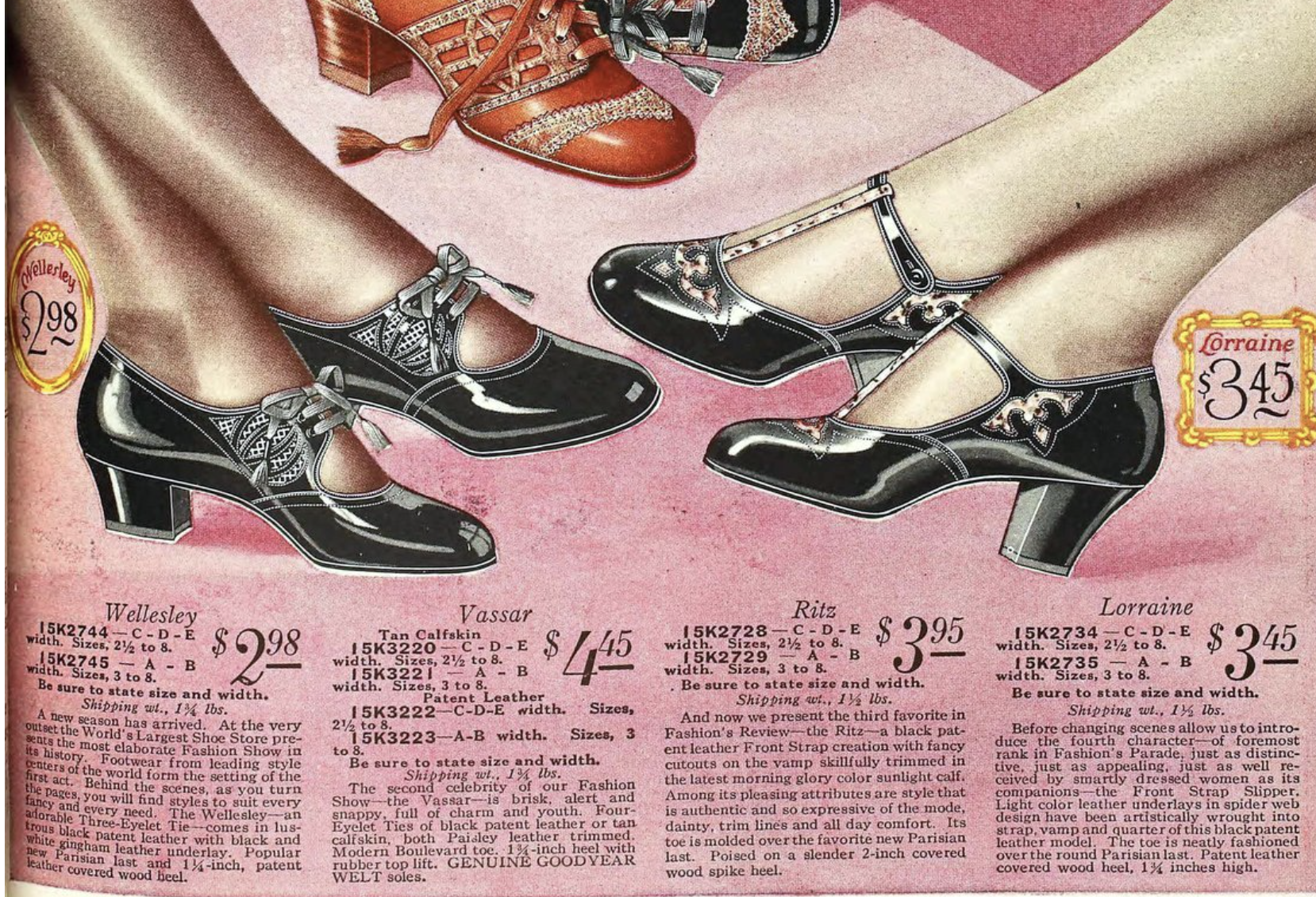
The 1920s were the first decade when women’s shoes were fully on show. Hemlines rose to the knee, and footwear became a statement piece. The Mary Jane and the T-bar became icons of the flapper era. Their secure straps and modest, curved Louis heels let women dance the Charleston all night. Designers used rich materials like brocade, metallic leathers, velvet and satin, and finished them with buckles, beading and rhinestone details. Daytime shoes were sensible two-tone leather oxfords and pumps. Evening shoes caught the light on the dance floor.
Our Bronte flats are a modernised version of the classic 20's Mary Jane, while our Petit Manhattan is inspired by the more opulent little heels that were saved for the Charleston dances.
1930s shoes
The Great Depression pushed shoe design toward elegance with restraint. Shapes grew sleeker and more sculpted, and heels rose a little higher and slimmer. The open toe and the slingback appeared and quickly caught on, and the peep-toe became a symbol of Hollywood glamour. Two-tone spectator shoes and laced oxfords stayed daytime staples. Salvatore Ferragamo experimented with cork and the first wedge heels. Even on a tight budget, women wanted shoes that felt polished and a little bit cinematic.
Our Budapest, London and New York flats take the shape of an elegant thirties evening heel and turn it into a comfortable flat, inspired by boarding the Orient Express.

1940s shoes
Wartime rationing shaped 1940s shoes more than anything else. Leather and rubber went to the war effort, so designers turned to cork, wood, raffia, fabric and even fish skin. The result was the chunky platform and the wedge, sturdy and practical but still feminine. Ankle straps, peep-toes and slingbacks gave these heavier silhouettes a lighter, flirtatious feel. Utility was the watchword, yet women still found ways to make every pair count. Bold colours and clever details made the most of what was available.
Our Parisienne and Montpellier flats were modelled off the more flirtatious silhouettes to the work-sensible oxfords of the 1940's era.

1950s shoes
Rationing ended, and the 1950s brought a return to luxury and refined femininity. Roger Vivier’s work with Dior led to the stiletto, a slim, sky-high heel made possible by a steel core. It became the decade’s defining shape. Pointed-toe pumps in pastels and polished leathers went with full-skirted New Look dresses. At the same time, ballet flats grew popular through stars like Audrey Hepburn and Brigitte Bardot. Saddle shoes and loafers became staples for the new teenage market. Glamour and youthful ease sat side by side for the first time.
Our Vivienne and Este heels were inspired by the stiletto heels of the late 1950's .

FAQ
What shoes did women wear in the 1920s?
Mostly T-straps and Mary Janes with low, curved heels.
Were flats worn in the 1930s?
Low flats existed, but evening shoes usually had heels. Our flats reimagine 1930s heels with a flat base.
What are 1940s shoes called?
Common styles include wedges, oxfords, peep toes and slingbacks.
What heel height is a kitten heel?
Generally a low heel of a few centimetres, popular from the 1950s.